
WSU GLOBAL SUMMIT
Moderators
Betsy Cantwell
President
Washington State University
On February 6, 2025, the Washington State University (WSU) Board of Regents met in a special session to announce the selection of Dr. Elizabeth “Betsy” Cantwell as the university’s 12th president. She is the first woman to hold the position in the university’s 135-year history.
Cantwell came to Washington State University from Utah State University, where she successfully led a $1.3 billion annual operating budget spanning across the state of Utah in a 30-campus system. As president, she made significant achievements, including securing a record-breaking $495 million in sponsored research expenditures, increasing student scholarship funding by 10%, and overseeing the expansion of physical infrastructure with the groundbreaking of new education buildings and facilities. She is also credited with strengthening academic partnerships with industry leaders and with the reorganization of the Academic Enterprise. Beyond her academic accomplishments, Cantwell demonstrated strong leadership in intercollegiate athletics, successfully navigating the complex landscape of modern college sports and engaging in the revitalization of the Pac-12 Conference.
Prior to her role at Utah State University, Cantwell held senior leadership positions in research and innovation at the University of Arizona and Arizona State University. At the University of Arizona, she oversaw a research portfolio exceeding $825 million annually. During her tenure at Arizona State University, she spearheaded the impressive growth of their research enterprise, increasing annual research expenditures from $435 million to $680 million in just three years.
Cantwell’s career also includes extensive service to US national security. She held leadership roles at Lawrence Livermore National Laboratory and at Oak Ridge and Los Alamos national laboratories. Her work advanced critical missions in energy, defense, and space exploration, collaborating with key federal agencies such as the Department of Energy (DOE), the Department of Defense (DOD), NASA, and the National Nuclear Security Administration (NNSA).
Cantwell holds an MBA from the University of Pennsylvania’s Wharton School; a PhD in mechanical engineering from the University of California, Berkeley; and a BA in human behavior from the University of Chicago.
Dave Cillay
Chancellor, Global Campus
Washington State University
Dr. David R. Cillay is the chancellor of Washington State University’s Global Campus. Dr. Cillay oversees WSU’s Global Campus, Learn365, Professional Education, and Learning Innovations. He is responsible for online and external program implementation at locations away from WSU’s physical campuses.
Dr. Cillay is internationally known as an expert in the field of eLearning. He has been published in journals and textbooks and has presented at national and international conferences regarding online education, learning design, change leadership, and academic technology. He has also instructed in and managed a graduate program in instructional design. Dr. Cillay has served on the board of directors for the University Professional and Continuing Education Association and the board of directors for the Online Learning Consortium. He was also the founding chair of the online learning network for the University Professional and Continuing Education Association, was a member of the Western Coop for Educational Technology steering committee, and was on the board of directors for the American Distance Education Consortium. Dr. Cillay held faculty appointments at WSU and the University of Idaho.
Dr. Cillay started at the Center for Distance and Professional Education (CDPE) in 2003 as the director of instructional development and technology and has been responsible for the design, development, and maintenance of online courses and programs scheduled for delivery through CDPE. Under his leadership, CDPE evolved into the Global Campus – the sixth campus in the

Kerri Davidson
Vice President of Institutional Affairs; Chief Administrative Officer
Washington State University
Kerri Davidson serves as the vice president of institutional affairs and as a chief administrative officer to Washington State University President Dr. Betsy Cantwell. Prior to joining WSU, Davidson held pivotal leadership roles at Utah State University (USU) and Arizona State University (ASU), the largest R1 university in the US. At Utah State University, Davidson was instrumental in the reorganization of the academic enterprise. Her work focused on a comprehensive statewide redesign of the USU system, through which she championed organizational efficiency and the development of financially sustainable business operations across the enterprise. As the inaugural executive director and chief of staff for the ASU Public Enterprise, she helped oversee various units with an annual operating budget exceeding $5.1 billion. Her tenure at ASU was marked by significant institutional transformation, including building a center of excellence at the Biodesign Institute under Nobel Laureate Dr. Lee Hartwell and spearheading complex corporate partnerships.
Davidson is widely recognized for her visionary leadership. She was named a 2023 Champion of Change by AZ Business and a 2021 Most Admired Leader by the Phoenix Business Journal. Notably, between 2020 and 2022, she was instrumental in the State of Arizona’s COVID-19 response, leading the logistics and infrastructure for the nation’s first public saliva-based PCR testing program through a $100 million state partnership.
A certified project manager, Davidson holds a master’s degree in healthcare innovation from Arizona State University and a master’s degree in organizational leadership from Northern Arizona University.
A first-generation college graduate, Davidson brings over 25 years of experience in higher education advancement, organizational leadership, and enterprise development.

Jake Dowd
Director of Federal Relations, Government Relations
Washington State University
Jake Dowd joined WSU in 2023 as the director of WSU federal relations. Jake leads the DC office, where he supports strategic efforts to elevate WSU’s federal legislative priorities and represents the university to members of Congress, the administration, federal agencies, and higher education organizations.
He has nearly two decades of experience working in Washington, DC, in higher education, association, and international affairs work. Dowd previously served as federal relations coordinator at the University of Nebraska and senior government relations specialist at the National Education Association. He received his BA from Nebraska Wesleyan University and earned a certificate in the Asian Pacific Leadership Program from the East-West Center in Honolulu, Hawaii. Since coming to WSU, Jake has stepped into leadership roles, serving on the board of the Science Coalition and co-leading the Association of Public and Land-Grant University Council on Government Affairs’ winter meeting.
Chris Riley-Tillman
System Provost and Executive Vice President
Washington State University
Chris Riley-Tillman was named WSU provost and executive vice president in May 2024 and joined WSU on July 1, 2024.
Prior to joining WSU, Dr. Riley-Tillman was the dean of the College of Education & Human Development at the University of Missouri. He held the Joanne H. Hook dean’s chair in educational renewal and was a professor in the department of Educational, School & Counseling Psychology.
He previously served as associate provost for faculty affairs and institutional effectiveness. Dr. Riley-Tillman is one of the co-developers of direct behavior ratings as well as a recognized authority in evidence-based practice in schools, the application of experimental design, and analysis in applied educational settings.
In relation to these interests, Dr. Riley-Tillman has participated in leadership roles on seven federal grants and is a senior advisor for the National Center on Intensive Intervention. He is also the creator and lead developer of the Evidence-Based Intervention Network. This nonprofit website contains free evidence-based intervention and assessment resources for educational professionals developed by researchers. He has published over 80 journal articles and 6 books.

Samantha Swindell
Associate Dean, Undergraduate Studies and Scholarly Professor of Psychology, College of Arts and Sciences
Washington State University
Samantha Swindell is a scholarly professor in the Department of Psychology and the assistant dean of undergraduate programs for the College of Arts and Sciences. She completed her BA with honors in psychology at the University of Puget Sound in 1993 before coming to Washington State University to earn both a master’s and doctoral degree in experimental psychology.
Swindell completed a postdoctoral research appointment at WSU in 1999 and served as the director of the undergraduate program in psychology prior to her appointment as an assistant dean at the College of Arts and Sciences in 2015. Swindell’s expertise is on behavioral principles of learning with particular interest in the role these principles play in evidence-based practices in teaching and training.
Panelists

Sally Amoruso
Chief Partner Officer
EAB
Sally Amoruso serves as chief partner officer and the voice of EAB’s partners on the executive committee. Internally, she is the senior-most executive, ultimately responsible for EAB partners’ experience. Externally, she serves as a strategic thought-partner and trusted advisor to hundreds of university presidents, provosts, leadership teams, and boards, providing guidance on institutional strategy, transformational leadership, and change management.
Since 2018, Amoruso has hosted EAB’s Presidential Experience Labs, a signature event that engages presidents of out-of-sector companies driving dramatic change, such LinkedIn, Slack, Google, and Open AI. In 2020, she founded EAB’s New Presidents Intensive, which has supported over 200 presidents as they have transitioned into office. She also oversees EAB Consulting, which provides intensive, hands-on support in areas such as strategic planning, strategic enrollment management, student communications, and more. She is a frequent host of EAB’s Office Hours podcast and leads EAB’s Industry Insights Speaker Series, bringing thought leaders to EAB for open discussion, debate, and idea-sharing. She is also a nationally sought-after speaker and facilitator.
Since 2023, Amoruso has served as a proud trustee on the board of American University, a private R1 research institution located in the nation’s capital. Prior to EAB, Sally spent more than 20 years as a client-focused C-suite executive at the Advisory Board Company, the Corporate Executive Board, and several healthcare start-ups. She received her AB in East Asian Studies from Harvard University, her MA in international studies from the University of Pennsylvania, and her MBA from the Wharton Graduate School of Business.
Amoruso is a first-generation Asian American and proud parent of two creative musician-actors launching their careers in Los Angeles. In her spare time, she can be found practicing yoga, hiking in the Hollywood Hills, and traveling the globe.
Noah An
Legislative Assistant
Office of Senator Patty Murray
Noah An leads tech, telecom, trade, transportation, housing, and infrastructure policy in the office of U.S. Senator Patty Murray. He previously served on the Harris for President campaign, and held various policy roles in Seattle, including as an advisor to the Seattle City Council. Raised in the Seattle area, Noah is an avid hiker and backpacker, and a proud graduate of the University of Washington.

Doug Burger
Corporate Vice President, Microsoft Research
Microsoft
Doug Burger is a research leader in artificial intelligence, computer architecture, and computer systems. Not only has his research has been highly influential in the field of computer architecture, but he has also led engineering teams that have designed and shipped novel computing systems at data center scales and made key contributions to the field of artificial intelligence. He is currently a both a technical fellow and a corporate vice president at Microsoft, serving as the managing director of Microsoft’s Research’s worldwide labs. In that role, he oversees a global organization of over 1,000 researchers and engineers, steering the organization to generate strategic breakthroughs in artificial intelligence and computer science.
Burger received his BS in computer science from Yale University in 1991, then went on to earn his MS and PhD in the same field from the University of Wisconsin-Madison in 1993 and 1998 respectively. From 1998 to 2008, he was a member of the computer sciences faculty at the University of Texis in Austin, where he co-led a research lab that generated a stream of innovations in computer architecture. Hundreds of millions of microprocessors worldwide contain advanced technologies (such as non-uniform caches) that were invented in his laboratory.
In 2008, Microsoft recruited him to build a computer architecture group in Microsoft Research. From then to 2018, he led teams that pioneered advanced large-scale system designs such as Brainwave (for service ultra-efficient AI for Bing and Office), Accelerated Networking, and Catapult. Every server deployed in Microsoft’s Cloud now incorporates a hardware platform designed by Doug’s research team.
In 2018, Microsoft asked Burger to move with his team into Azure to co-found their custom hardware division, where he then served as an engineering executive, designing AI supercomputers for Microsoft’s Cloud. During that time, Doug and two of his team members co-invented a new class of number formats called MX, which were released in 2023. These number formats define ultra-efficient numerics for AI (four, six, and eight-bit formats) and have been widely adopted by the AI industry. This standard will be shipping as the primary performance improver in Nvidia’s new Blackwell chips, which are slated for release later this year. These number formats are expected to save Microsoft tens of billions of dollars in AI serving costs and hundreds of billions of dollars for the broader industry.
In 2023, Burger was asked to move back to Microsoft Research to take on a leadership role as a director of Microsoft Research Core, the organization’s worldwide labs. He supervises over 1,000 scientists and engineers and is chartered with steering Microsoft’s research organization through the transition to the AI era.
Burger has received many awards for his research, including the 2006 ACM Maurice Wilkes Award. He has published over 100 scientific papers, which have been cited over 41,000 times. He is also the co-inventor of more than 100 US patents. He is also a fellow with the Association for Computing Machinery and the Institute of Electrical and Electronics Engineers.

Lauren Caruso
Student
Washington State University
Lauren Caruso is an honors college student at Washington State University – Pullman, where she is pursuing a BA in management information systems with a cybersecurity basic certificate.
As a member of the VICEROY CySER program, she is developing technical and analytical skills at the intersection of business and cybersecurity. She is currently seeking full-time opportunities post-graduation where she can apply her knowledge in information systems, security, and data-driven decision-making to support organizational innovation and protection.
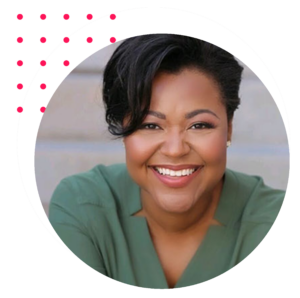
Kimberly Clark
Deputy Chief Information Officer, Enterprise Technology
Arizona State University
Kimberly Clark is a seasoned technology leader with a passion for innovation, audacious goals, and developing high-performing teams. She joined Arizona State University in March 2023 as deputy chief information officer. In this role, she is chartered with advancing digital transformation and driving operational excellence.
Prior to joining ASU, Kimberly was head of strategy and operations for IT, information security, and privacy engineering at Twitter. Clark led strategy formulation and execution and provided oversight of mission-critical projects and regulatory commitments. Her organization was also responsible for data analytics, technical program management, M&A activity for the chief information security officer and the global head of IT, and organizational culture.
Prior to Twitter, Kimberly was the managing director of analytics at Charles Schwab, where she enabled executive and senior leaders to make data-driven decisions across the institutional and advisory lines of business while informing regulatory, legal, and media responses. Later, she successfully established a decision support and governance practice within Schwab’s 20,000-member technology organization to support their chief information officer in leading technology as a business.
Clark started her career in management consulting at Accenture, working across aerospace and defense, insurance, telecommunications, and transportation industries. It was in this early career role where she built stamina and learned to voice her perspective unapologetically.
Clark holds her MS in information management from Arizona State University. She is a board member of Girls in Tech – Phoenix as part of her ongoing commitment to diversity and inclusion in the tech industry. Clark’s most fascinating role, however, continues to be “the best auntie ever”.

Meg Daly
Associate Dean for Undergraduate Education and Professor of Biology
The Ohio State
Meg Daly’s research program encompasses three interrelated topics: describing the anatomical, taxonomic, and geographic diversity of actiniarian sea anemones; testing hypotheses about the causes and effects of this diversity; and exploring the data and methods used to describe and explain diversity. She has an active field program and employs both molecular and morphological data to solve evolutionary questions.

Jan Dasgupta
Chair, Mathematics & Statistics; Regents Professor
Washington State University
Nairanjana “Jan” Dasgupta is a Boeing Distinguished Professor of science and mathematics and a professor of statistics in the department of mathematics and statistics. She is also the director of the data analytics program. She was the founding director of the Center of Interdisciplinary Statistics Education and Research (CISER). She has been a fellow of the American Statistical Association (ASA) since 2018. She is part of the Advisory Board for Academic Data Science Alliance (ADSA). She is the president elect for the Caucus for Women in Stats (CWS) and chairs the Justice, Equity, Diversity, and Inclusion (JEDI) section for the Western North American Region’s (WNAR) International Biometric Society. She is passionate about data literacy for all.
Dasgupta got her BSc (honors, 1990) from Presidency College, Kolkata. She received both her MS (1994) and her PhD (1996) from the University of South Carolina. Since 1996, she has been at Washington State University as an assistant (1996-2002), associate (2002-2008), and full professor (2008 to present).
Dasgupta’s forte is interdisciplinary research, solving real-life problems from other disciplines by developing statistical methodology with a focus on multiple testing and categorical data. She is involved with all three areas of faculty life: research, teaching, and service. Her interest in interdisciplinary research is apparent in her 62 publications. Exposing her students to real-life problems and teaching them how to communicate their solutions has always been her mantra in her classes. She has served as an advisor to 77 graduate students. She is on the editorial boards of “The American Statistician” and “Journal of Statistical Computations and Simulations.” She has an active research profile and has been funded by NIST, NSF, NIH and is currently co-PI on two funded grants.
Outside of work, her family keeps her busy. She is a very involved mother and is an active advocate for special education and those with learning disabilities. She enjoys reading, poetry, art, and cooking, especially using Indian spices in other cuisines.

Patrick Flood
Principal
Cornerstone Government Affairs
Patrick Flood joined Cornerstone in August 2025 as a Principal at their Washington, DC office. Patrick is a National Security expert with over 30 years of military, defense policy, and national security legislative experience.

Jesus Trujillo Gomez
Industry Lead, Public Sector
Google
Jesus Trujillo Gomez is an industry executive for Google Cloud Public Sector. In his current role, Gomez leads the definition and implementation of the go-to-market strategy and next-generation solutions for Digital Natives. He has over 16 years of experience launching solutions and services across regulated industries that currently support hundreds of millions of daily users across telecommunications, financial services, and public sectors.

Ed Harri
Executive Vice President
Northwest Commission on Colleges and Universities (NWCCU)
Ed Harri, EdD, senior vice president, has served in faculty and administrative leadership roles for the last 23 years. At Whatcom Community College, Harri served as math faculty, department chair, division chair, dean for instruction, and vice president for instruction, as well as serving as the accreditation liaison officer. Most recently, Harri has served as the interim director of institutional effectiveness at Green River College.
He has dedicated his career to studying and improving student learning and outcomes, and he is passionate about using data as a tool to inform institutional progress and professional development for faculty and staff. He has presented the results of this work at many NWCCU workshops and conferences. He has also served as an accreditation evaluator and team chair for numerous mid-cycle and EIE reports and visits.
Harri holds a BA in mathematics from Whitman College, an MS in mathematics from Western Washington University, and an EdD in community college leadership from Oregon State University.
A lifelong resident of the Northwest, Harri enjoys spending time running and biking trails with his family.

Karina Hottinger
Student
Washington State University
Karina Hottinger is a third-year undergraduate student majoring in psychology and minoring in neuroscience. After spending time outside of class learning about the nature and scope of the opioid epidemic in America, Hottinger became aware of the need and opportunity to make a positive contribution in the field of addiction. This realization inspired her to focus her own research interests on opioid use disorder, pain threshold, and relapse prevention.
With the goal of entering a clinical psychology doctorate program, she is actively engaged in research-related activities on campus, intent on learning as much as possible about all aspects of the research process. This fall, she looks forward to working as a teaching assistant and helping other behavioral science students prepare to conduct research by learning statistics. Hottinger is excited to participate in Dr. Fales’s lab and contribute to the important work being done regarding pediatric chronic pain.
Outside of work and school, she enjoys hiking, rock climbing, reading, and spending time with family.

Bhargav Iyer
Student
Washington State University
As a driven and pragmatic student leader with a strong educational foundation in the sciences, Bhargav Iyer serves as both a researcher and a policy advocate. With academic roots in biology and chemistry, he brings the analytical depth of a science background to policy discussions, navigating complex issues with a clear, systems-oriented mindset. Resilience and compassion shape his work as he strives to drive meaningful change at the local, state, and federal levels.

Steve James
Associate Professor of Translational Medicine & Physiology
Washington State University
Steve James’ research focuses on the interaction between physical stressors (such as sleep-related fatigue), law, policy, training, and practice relating to operational performance for high-consequence occupations, such as military, law enforcement, and nursing. He strives to better understand the dynamics of performance in a wide variety of tasks: driving, social interactions, crisis intervention, and deadly force encounters. He utilizes neurophysiological measurements and simulation technology to evaluate training and performance of military and law enforcement personnel. This research will lead to more effective and economical training and greater public safety.
Prior to becoming an academic, James spent more than 23 years in the British infantry as a solider and officer, serving in Cyprus, the former Yugoslavia, Northern Ireland, and Afghanistan.

Brian Johnsrud
Global Director of Education Learning and Advocacy
Adobe
Brian Johnsrud is the global director of education learning and advocacy at Adobe, where he leads a team of experts in creating and delivering innovative educational opportunities for K-12 and higher education educators, students, and lifelong learners. With over 15 years of experience in this and similar roles, he oversees the company’s education programs, including content, curriculum, teaching resources, professional development, courses, credentials, public policy, thought leadership, and impact research.
Johnsrud’s mission is to empower educators and learners to use Adobe tools for creative and digital success in the classroom and beyond. He has a successful background in education and technology, having worked at Khan Academy as the director of content and curriculum and co-founded the Stanford Poetic Media Lab, a digital education research lab at Stanford University.
He holds an interdisciplinary PhD in humanities, education, and technology, an accelerated MBA from Stanford University Graduate School of Business, and two master’s degrees from Oxford University as a Rhodes Scholar. He also serves on boards and committees for several nonprofit education and EdTech organizations. He is passionate about advancing education equity, diversity, and inclusion and is a founding member of Adobe’s Indigenous and First Nations Employee Network.

Jonna Lee
Director of Research in Education Innovation
Center for 21st Century Universities; Georgia Institute of Technology
Jeonghyun “Jonna” Lee is the research in education innovation director at the Center for 21st Century Universities (C21U). Her research covers the intersection of learning sciences and educational technology, focusing on understanding and enhancing student motivation, engagement, and success. She leads evidence-based studies on how technology, such as AI-powered systems, digital credentials, and predictive analytics, can support effective learning in higher education and beyond.
Lee collaborates on cross-functional initiatives that translate research into practice, aiming to improve outcomes for diverse learners in large-scale online and blended programs. She also serves as the lead instructor for the data-driven education class in Georgia Tech’s Vertically Integrated Projects (VIP) program, mentoring undergraduate students in research on learning analytics and educational innovation.
Her work has been published in peer-reviewed journals in the fields of higher education, educational technology, and online learning. She has presented her findings at national and international conferences, including the American Educational Research Association (AERA), UPCEA, Learning@Scale, the Digital Credentials Summit, and the Online Learning Consortium (OLC) Innovate.
Before joining Georgia Tech, Lee was a research associate on the nationally recognized Chatbot Scaling Project at Georgia State University, where she studied the use of behavioral nudges to promote college completion.
Lee enjoys reading books, listening to classical music, learning new languages, and solving puzzles.

Tavonput Luangphasy
Student
Washington State University
Tavonput Luangphasy is a senior in the School of Engineering and Computer Science and an undergraduate researcher working in the Distributed Systems Research Lab. His focus is on developing efficient deep learning systems to enable fast and cost-effective AI solutions in resource-constrained environments. As AI continues to become more expensive, Luangphasy’s goal is to move this field in the opposite direction, making AI accessible at a lower cost.

Andy Perkins
Chair, Department of Marketing and International Business, Professor
Washington State University
Dr. Andrew Perkins is an associate professor of marketing and international business. Dr. Perkins’ research explores numerous facets of what is generally termed Implicit Social Cognition, broadly defined as the cognitive processes that affect our behavior but are unavailable to introspection by consumers and not directly observable by researchers.
Within the general domain of Implicit Social Cognition, Dr. Perkins examines the cognitive and behavioral effects of linking new or novel objects to the consumer self-concept, how the metaphorical relationship between psychological and physical experience affects behavior, and how implicit, or unconscious, attitudes and cognitive processes affect perceptions of race, gender, and nationality.
Dr. Perkins has published numerous articles in top Marketing journals, including Journal of Consumer Research, Journal of Consumer Psychology, and Journal of Management. Dr. Perkins is also the director of the Center for Behavioral Business Research (CBBR). The mission of the CBBR is to bring together industry leaders, academics, and students for the study of various behavioral issues relevant to business, consumers and broader society.

Stacy Rich
Principal & Director
Cornerstone Government Affairs
A hill veteran with nearly 17 years of experience working in Senate democratic leadership, Stacy Rich joined the Cornerstone team as a principle in 2020 after serving as the leadership staff director for Senator Patty Murray’s (D-WA) office.

Will Smith
Managing Principal
Cornerstone Government Affairs
Will Smith, a 23-year veteran of Capitol Hill, brings to Cornerstone a deep knowledge and expertise in the federal appropriations and budget process. Prior to joining the firm in March 2017, Will served as the U.S. House of Representatives Committee on Appropriations staff director. In this role, Will supervised and organized all aspects of Committee operations, including personnel, financial, oversight, communications and outreach – serving as the principal strategic and political advisor to Chairman Hal Rogers (R-KY). During his time on the Committee, he managed a robust agenda, to include over 200 investigations, over 600 budget and oversight hearings, and helped shepherd nearly 150 appropriations bills across the House floor.